

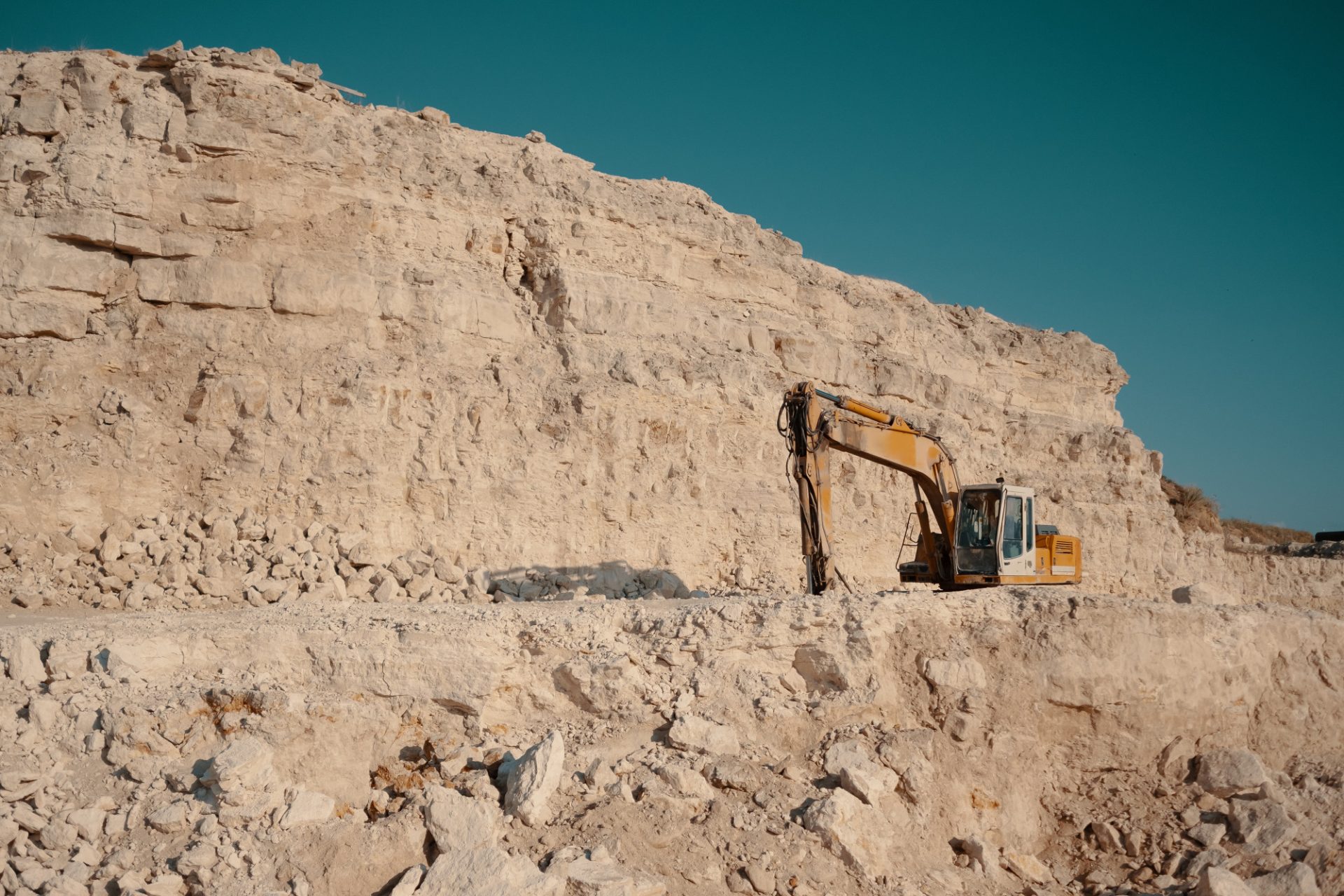
While agricultural sectors navigate the cost storm, Ecuador’s mining industry is experiencing a moment that deserves more strategic attention than it is currently receiving.
Lead and copper concentrate exports reached USD 252 million in January 2026, up 128% year-on-year. Other mining products added USD 135 million (+58.9%). Gold contributed USD 96 million (+25.5%). Taken together, non-oil mining products grew 32.2% in value and 19.3% in volume, making them the most dynamic segment of Ecuador’s export basket. [Source: BCE, Foreign Trade Bulletin, March 2026.]
This expansion is not happening in a vacuum. It is happening precisely as the U.S. launched “Project Vault” — a USD 12 billion strategic critical minerals reserve explicitly aimed at countering dependence on China, which controls 70% of global rare earth mining and 90% of processing. Washington is actively seeking mineral supplier partners. Ecuador, until recently seen primarily as an agricultural commodity exporter, has appeared on that map for the first time as a relevant actor in mineral supply security.
Signal for Senior Leadership
The combination of accelerating mining growth, U.S. strategic interest, and a GDP growth projection of between 1.8% and 2.0% for 2026 — per the Central Bank of Ecuador and major international organizations — builds an argument Ecuador’s business groups cannot ignore: mining is, at this moment, the only engine with the capacity to offset cooling domestic demand and cost pressure on the agricultural sector.
But there is an important distinction the export figures don’t capture: the USD 252 million in concentrates does not generate the same employment or local economic impact as the USD 729 million in shrimp exported that same month. Mining exports raw value with minimal local processing. The policy challenge — and the business strategy challenge — is capturing the opportunity without reproducing the extractive logic that has historically left little value in the territory.
For the logistics operator, the signal is different: mining requires specialized infrastructure, hazardous cargo handling under IMDG regulations, specific routes toward Asia (where most of the concentrate is destined), and differentiated storage capacity. It is a technically complex segment with few prepared operators today and growing demand. The window to position in that niche is open.